Start with a conversation
Services Approach Who we help About Contact Start with a conversation

Operations Consulting • Edwardsville

Business operations that run without you.

A business owner steps away from a working shop while the team keeps the operation moving
16Years solving operations problems before this firm
04Phases, with a usable handover after every one
07Ways to remove the friction slowing work down
5–50Team size this work is built around

The owner’s second shift

Build a business that needs your leadership, not your constant availability.

Customers and employees get your workday. Approvals, follow-up, hiring, and the problems nobody else can close get your evening. This pattern is common in growing companies: the business grew faster than the way decisions and work move through it.

The team waits for your answer

The quote, the price, the approval, and the customer exception all wait for the answer that lives with you. Your calendar becomes the operating limit, even when the team has the skill to keep moving.

Time away creates a second backlog

The work waits while you are gone, then competes with everything that arrived while you were away. A day off becomes two days of recovery, so constant availability starts to feel easier than stepping back.

The work only you can do gets crowded out

Leadership, customer relationships, and the ideas that could move the company forward keep losing time to routine decisions and recurring fixes. You stay busy keeping the business afloat instead of choosing where your attention creates the most value.

The owner’s deadlock

This is a structure problem,
not a discipline problem.

Working harder will not break the loop.
Working harder is the loop.

Owner’s Deadlock

  1. 01

    The first wait

    Decisions wait for you.

    Critical calls live in your head, your inbox, or the ten minutes between everything else. The work cannot clear until you are available.

  2. 02

    The work-around

    Work slows around the wait.

    People pause, guess, or route around the decision. Each workaround makes the business less predictable and puts more pressure back on you.

  3. 03

    The deferred fix

    The fix gets postponed.

    You can see what needs to change, but documenting it, assigning it, and making it stick takes time the bottleneck has already consumed.

  4. 04

    The return

    You step back in to keep it moving.

    The immediate problem is handled, but the company remains dependent on you. The loop has completed and is ready to start again.

The first win is choosing where your attention goes. Move one recurring decision, one incomplete handoff, or one piece of operating knowledge into a structure the team can carry, then build from there. Small changes, made consistently, create operating independence.

5-minute Owner Independence Score See where the business still depends on your availability.

Operating experience

16 years

Across logistics, supply chain, warehousing, trucking, international shipping, and project management.

Observe the work Name the constraint Stay through implementation

Scott enters where the loop gets stuck

Keep the work that needs your judgment. Build coverage for the rest.

Scott’s first question is often, “What part of this business do you most want to keep doing?” The goal is to protect the work where your judgment creates the most value, then give routine decisions, handoffs, and fixes a path through the team.

Sixteen years in business operations taught him to follow the work before recommending a change. He finds the constraint, starts with the smallest useful move, and stays until the new way of working holds.

Meet Scott Caby

5-minute assessment

See where the business borrows your attention.

Identify the first constraint to move.

See your score
A small-business owner working through paperwork alone at his workshop bench01

Start here

Put the real friction on the table.

Bring one example of work that keeps pulling you away from the part of the business where you add the most value. Scott traces what is happening, what should remain yours, and what the team should be able to carry.

Book a 30-minute call
A team reviewing operating charts and reports together02

Name the constraint

See what is actually holding work up.

The operational assessment follows the work end to end. You get the current process mapped, the constraint named with the evidence behind it, and a plan for what to fix in what order.

A factory team receiving hands-on implementation training03

Make it hold

Build the change into the company.

Epoch Point stays through implementation, trains the people who will run the new system, and re-measures the work at three and six months. You keep the documentation either way.

How Epoch Point has helped

Three ways Epoch Point helped businesses move.

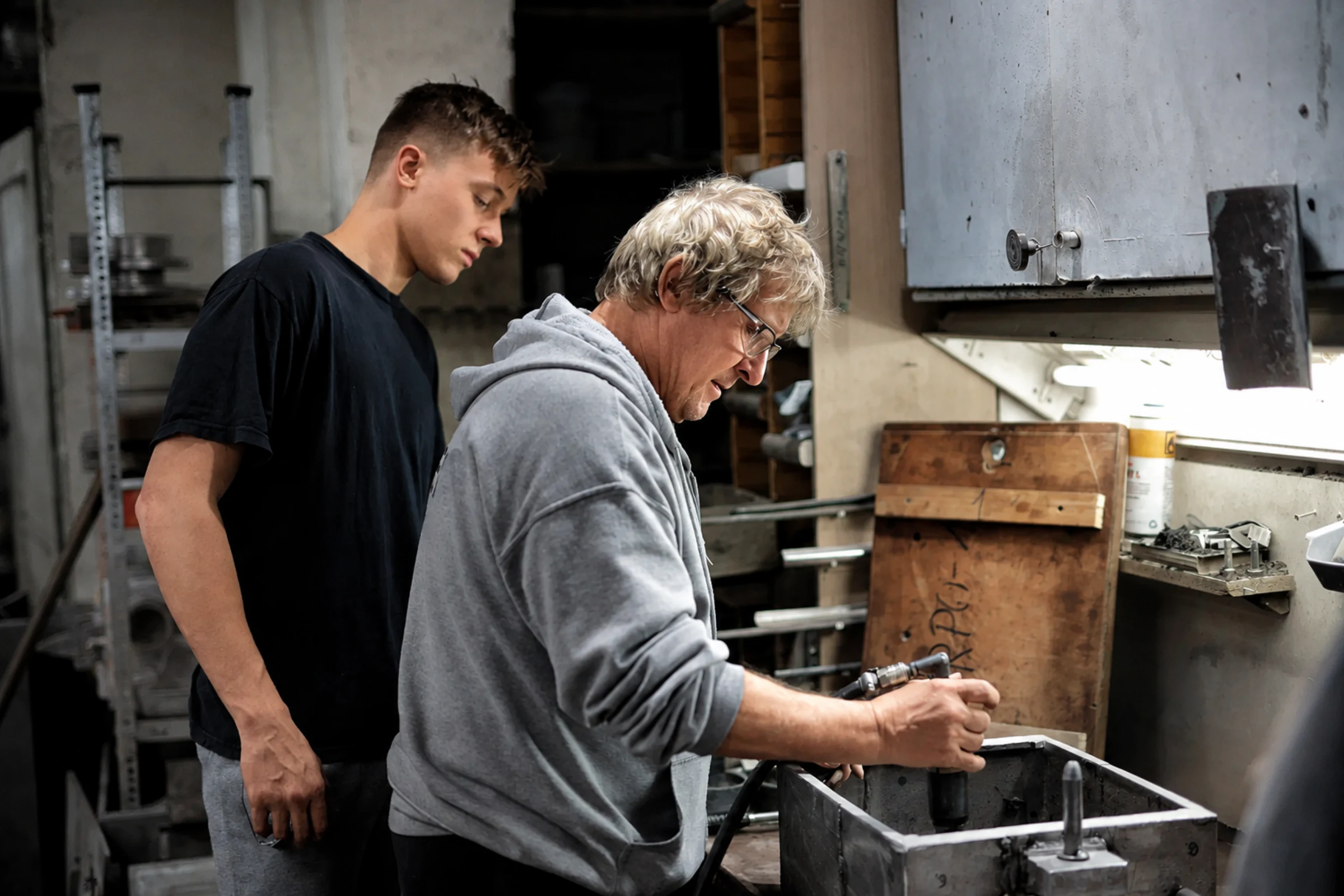
Two tradespeople sharing bench work during a handoff
Owner bottleneck1→3

He got some of his life back

A field-services owner where nothing moved until he touched it: dispatching the crews, setting the pricing, writing every quote. Epoch Point built a field quoting tool his team could actually use and defined the handoff around it. Three people quote now instead of one, jobs close faster, and the business wins more work because it answers faster.

A team member mapping work steps to the roles that own them
Growth outpacing structure15 hrs/wk

He finally knew what he was hiring for

A business that had grown too fast to know what it needed. The need for people was obvious; the roles were not. Epoch Point mapped the workflows, wrote the job descriptions, and built a formal onboarding process. A new hire was made within 30 days, and an estimated 15 hours a week went back to the owner.

Working notes and binders open across a services desk
Technology already paid for30%→all

He stopped paying for software nobody used

A company paying for a CRM that roughly 30 percent of the team used. Nothing new was bought. Epoch Point worked out how the tool had to fit the way the work already ran, then trained everyone to use it the same way. Utilization went from 30 percent to the whole team. A very simple fix, in the end.

Three Epoch Point Advisory engagements, described without naming the businesses involved

Free Owner Independence Score

See where the business still needs your availability.

Score decisions, handoffs, fixes, and coverage. Your results show where the business borrows the most owner attention, what the team already carries, and the first operating move to make.

16 questions4 constraint scores1 first move
Get my Owner Independence Score
Two construction professionals reviewing plans at an active job site

Who this is for

Businesses growingfaster than theirown structure

The problems differ. The operating pattern repeats.

01 / The condition

Growth is outpacing the operating system.

Five to fifty employees. A capable team. The owner is still the approval path, the escalation point, and the keeper of how the work really gets done.

02 / The pattern

The industry changes. The ceiling does not.

Construction, trades, professional services, logistics, manufacturing, technology, healthcare, retail, and hospitality all stall when structure stops keeping pace.

03 / The outcome

Build room to lead, grow, or step back.

Choose the work that deserves your attention while the team carries routine decisions, handoffs, and operating coverage.

Common questions

Questions owners ask first

Operating independence gives you a choice about where your attention goes. Scott identifies the work that benefits from your judgment, the routine work the team should carry, and the decisions, handoffs, and coverage needed to separate the two.

Epoch Point Advisory is an operations consultancy in Edwardsville, Illinois that maps how work actually moves through a business, names the structural constraint limiting throughput, and rebuilds the process around it. Small and mid-size companies across the St. Louis region keep the documentation the firm produces after the engagement ends.

Epoch Point Advisory carries each engagement from diagnosis through implementation. Scott maps the current process, identifies the constraint, designs the new workflow, trains the people who will run it, and measures the result at three and six months. The business keeps the process maps, procedures, role decisions, and baseline measures created along the way.

A business consultant advises broadly on strategy, marketing, or finance. An operations consultant works on how the business runs day to day: the processes, handoffs, documentation, and systems that turn effort into output. Epoch Point Advisory is the second kind, and the work is structural rather than advisory.

An operational assessment is a structured review of how work moves through the business. Epoch Point Advisory delivers three things from it: a mapped view of the current process, the named constraint with the evidence behind it, and a remediation plan with sequence and owners attached. The documentation is yours.

A fractional COO occupies a seat and runs operations continuously. An operations consultant fixes the structure and leaves. Epoch Point Advisory does the second: a scoped engagement that diagnoses the constraint, rebuilds the process, and hands over a documented system the existing team runs without ongoing outside help.

Capable teams hit a ceiling when the structure around them stops fitting the size of the business, not when effort drops. Epoch Point Advisory finds that ceiling in the handoffs, approvals and undocumented steps that accumulated while the company grew, then rebuilds the sequence so the same people carry more work without adding hours.

Epoch Point Advisory hands over a documented artifact at every phase: the process map, the remediation plan, the standard operating procedures, and the measures that show whether the fix is holding. Those documents belong to the business, and the team runs the system without the firm in the room.

Epoch Point Advisory sets the baseline before anything changes, with everyone who touches the work present, and re-measures at three months and again at six. If the numbers have not moved, or the business has drifted back to where it started, the firm returns and looks at it again. That accountability is inside the engagement.

Give every decision a clear place to start.

In one focused two- to three-hour Clarity Session, define where the business is going, why it exists, and what it stands for in language the whole team can use.

Start with a conversation